

Heavy Boots in Tight Rooms
Steering Bigby Wolf through an apartment hallway feels like pushing a wooden wardrobe across wet shag carpet. The walking speed is locked to a sluggish crawl, turning arcs are wide and unresponsive, and interacting with basic clues requires parking yourself in front of invisible hotspots before the cursor icon even decides to wake up. Playing on the Steam Deck made the setup clunkier right out of the gate, since the game defaults to mouse navigation until you dig into the settings menu to manually toggle controller inputs.
That lack of immediate physical response sets the tone for how everything else handles. You do not maneuver Bigby so much as you point him toward a bloody doorframe, wait for the animation to catch up, and watch the camera stutter slightly as it pivots around hallway corners. It gets you through crime scenes in Fabletown, but there is zero crispness to the simple act of walking across a room.

Fights Without Impact
The store page lists this as an action game, but anyone expecting melee mechanics will be staring at glorified cutscenes with quick-time prompts. When Bigby trades blows with rival fairy-tale figures in back alleys, you do not manage spacing, active hitboxes, or dodge recoveries. You wait for a red circle or a directional arrow to flash in the middle of the screen, tap the corresponding button, and watch a canned animation sequence roll to completion.
There is no mechanical weight behind any strike. You never feel the contact of Bigby driving an elbow into someone or slamming a thug into a jukebox because the outcome is entirely detached from physical timing. Missing an input prompt rarely forces a recovery scramble; the game simply plays an alternate animation where Bigby eats a punch before serving up another prompt to keep the story rolling. It looks brutal in screenshots, but your hands are just waiting around for basic reflex tests.

The Black and White Filter
Telltale did a solid job cleaning up the visual presentation for modern displays. The bold comic ink lines look razor-sharp, background environments have much cleaner textures, and the 1980s neon palette still gives every city street a grim look. The headline addition here is Noir Mode, which you can switch on at any time to strip out the pink and purple hues in favor of high-contrast black and white cinema lighting.
Noir Mode works best during slow, moody dialogue sequences, like sitting across from Colin the pig in Bigby's crummy apartment. It falls flat the moment any sudden movement happens. Fast scuffles in dark rooms become a mess of gray silhouettes blending into alley walls, making it annoying to spot on-screen prompts against shadowy backgrounds. The visual upgrade is nice for still frames, but it does not fix the rigid cuts between pre-rendered animations and live inputs.

The Value of the Extra Cut
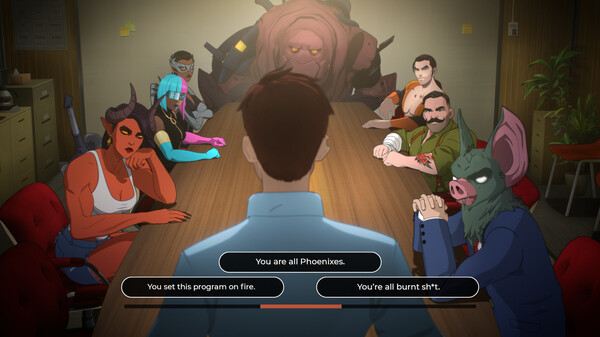
At twenty dollars, the package bundles all five original episodes with behind-the-scenes interviews, an art gallery, and roughly forty minutes of playable deleted scenes. If you want to log into a Telltale account to carry decisions into the upcoming sequel, that integration is built right in. The writing still delivers biting dialogue, cynical fairy tales, and good detective pacing that keeps you invested in finding out who is killing fable residents.
The problem is that the game demands almost nothing from you as an actual player. You read dialogue choices against a countdown bar, inspect bloody rooms, and occasionally flick a thumbstick so Bigby ducks under a thrown glass bottle. It is an entertaining interactive comic book that moves on rails, but mechanically, it is completely hollow.



Comments 17
BestNewest★ Best comments
Font sizing isn't clear from the review even if the line art looks cleaner, and Steam Deck sounds rough without messing with layouts first. Noir mode might help contrast a bit, but actual colorblind settings are still up in the air. Clear speaker labels and dark subtitle boxes should really just be standard by now.
How many hours to roll credits on a first run? The review makes it sound like a pure watch-and-click affair.
The environmental storytelling carries the entire second act; the Pudding & Pie crime scene still haunts me a decade later. [spoiler] Bigby's transformation sequence in the remaster retains every brutal frame of the original, the sound design, the bone-crunch timing, the way the camera lingers on his trembling hands afterward [/spoiler]. A competent visual wrapper cannot disguise that the engine still refuses to let us inhabit the wolf, only watch him.
19.99 for sluggish qte walking. way too expensive for what you get. refunded right before the cutoff. not worth the time.
qte only not for me
My copy from the 2014 original is still at episode two. The noir filter and stable frame rate might finally give me the push to see the whole story, though I suspect the investigation pacing will still test my patience.
The walking speed during investigations is painfully slow and it drops your inputs on Deck constantly. The quick-time events feel awful to play and clicking on objects is clunky as hell. Interaction hitboxes feel completely broken.
@TrevQTE combat D-tier kit unreactable startup zero defensive options. Investigation movement F-tier locked animation cancels. Noir filter S-tier visual clarity though. Solid B-minus tier narrative delivery carries the package.
Reminds me of the original Wolf Among Us I grabbed back in 2014 and still haven't finished past episode two. My backlog is laughing at me. Wishlisting it for now, maybe I will pick it up on a sale later.
The sax-heavy noir soundtrack is still the best part of Fabletown, and the opening music gives me chills every time. That moody sound really sets the tone for the late-night club scenes.
@Chloe V.The environmental storytelling carries the entire second act; the Pudding & Pie crime scene still haunts me a decade later. [spoiler] Bigby's transformation sequence in the remaster retains every brutal frame of the original, the sound design, the bone-crunch timing, the way the camera lingers on his trembling hands afterward [/spoiler]. A competent visual wrapper cannot disguise that the engine still refuses to let us inhabit the wolf, only watch him.
0 banner ads 0 forced video ads 0 rewarded ads. Steam version clean. Mobile port would probably choke on them though.
Hello @parryframe, thank you for the review. Forgive my phrasing, but is the performance smooth on Steam Deck after the manual input configuration, or does the frame pacing still suffer during scene transitions?
@KestutisFont sizing isn't clear from the review even if the line art looks cleaner, and Steam Deck sounds rough without messing with layouts first. Noir mode might help contrast a bit, but actual colorblind settings are still up in the air. Clear speaker labels and dark subtitle boxes should really just be standard by now.
@KestutisAfter adjusting the input configuration manually in Steam Input, the game runs smoothly on Deck. No frame drops during scene transitions or exploration.
My daughter loved the comic-book look when I showed her the noir toggle but the slow walking during investigations tested her patience. Good clean fun for an hour after dinner if you treat it like a bedtime story with choices.
How many hours to roll credits on a first run? The review makes it sound like a pure watch-and-click affair.
skill issue ngl qte fest for twenty bucks 💀
@toast147 hours logged anything under 100h is just a demo. This remaster strips what little agency the original had and calls it a visual upgrade. The QTE combat was already a joke but removing even the illusion of defensive timing? Pathetic. Telltale games have always been interactive movies masquerading as player choice and this release just doubles down on the deception. Come back when you've cleared NG+7 on SL1.
@mpr98The original 2013 game was literally just like this though. You never had any defensive control back then either, it was always pure QTEs and the exact same stiff animation locks when walking around.