
Loose Movement and Floating Neutral
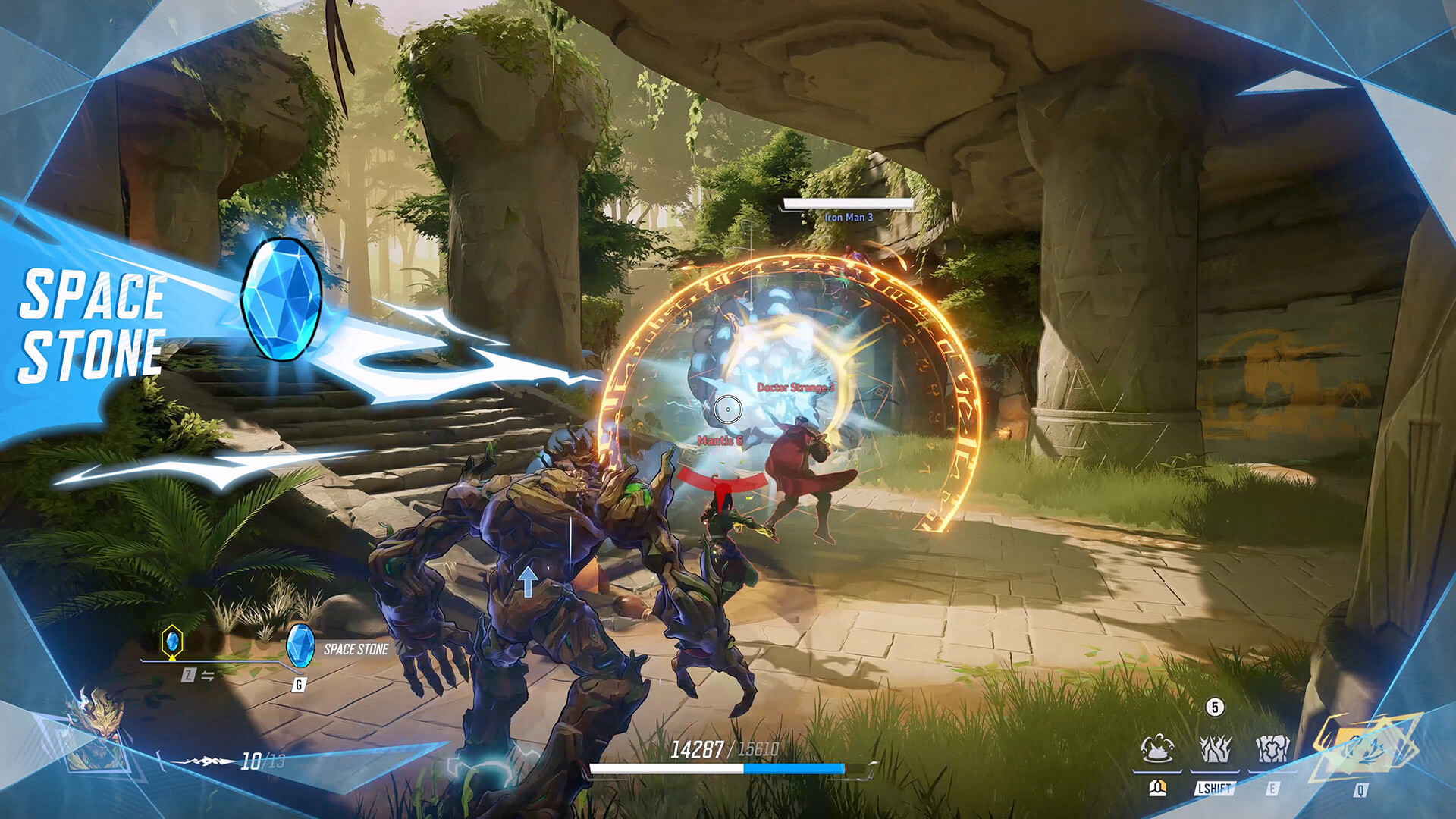
The controls feel surprisingly soft the moment you load into a match. Third-person shooters live and die on quick turns and clean stops, but Marvel Rivals leans heavily into floaty air time and forgiving drift. Characters start and stop without much weight behind them. That makes running around the map easy for anyone picking up a mouse, but it strips away the tight responsiveness you want when trying to weave through incoming fire.
Dodge maneuvers and burst dashes do not give you the clean invulnerability or snappy recovery you expect from a serious competitive action game. When you press an evasive skill, you are mostly just hurling a large hurtbox through space and praying the incoming projectile spray misses you. The camera sits close enough to make corner checks feel slightly cramped, yet far enough back that close-range tracking turns into a chaotic camera wrestle.

Hitting Air in 6v6 Scrimmages
Once two squads crash on a point, melee clarity falls apart completely. I tried playing characters that rely on direct close-range strikes, and half the time you cannot tell whether your fists actually connected or just scraped through an oversized bubble shield. The impact feedback lacks bite. You throw a heavy punch or swing an energy blade, and the enemy barely flinches while your screen drowns in flashing particle bursts.
Hitboxes feel generous to a fault. Projectiles register hits when visually missing by noticeable margins, while point-blank melee strikes occasionally fail to connect because an ally or a piece of scenery blocked your line of sight. English voice callouts and interface prompts help you track who used which ultimate, but the audio cues frequently get drowned out by overlapping explosions and crumbling masonry.
Destruction Mechanics and Frame Dips
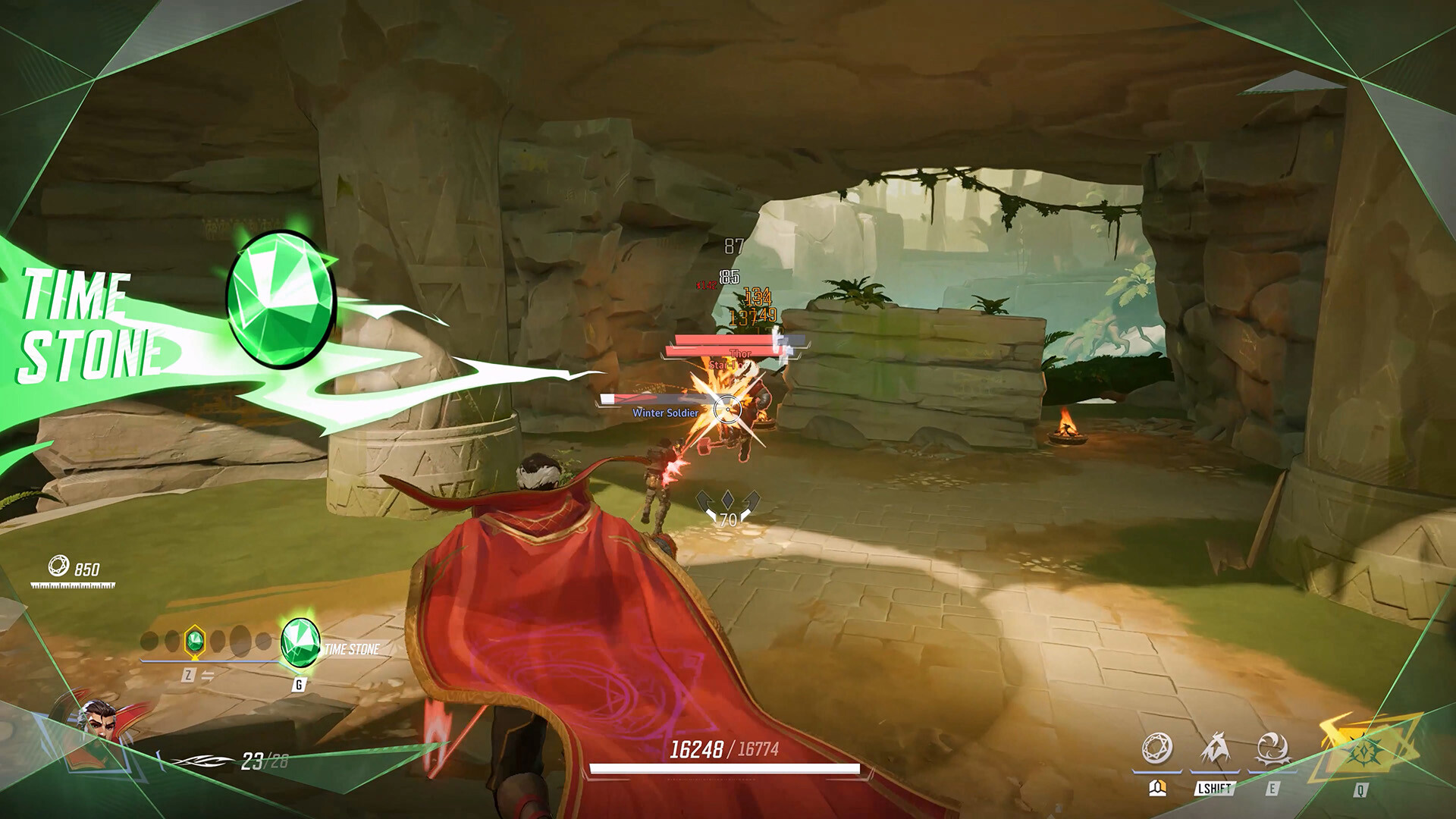
The environmental destruction sounds great on paper, and ripping apart buildings in Asgard or futuristic Tokyo 2099 gives the maps personality. You can blow out a wall to expose a sniper or smash a bridge to drop someone into a pit. The catch is what happens to performance during those moments. When walls shatter while twelve heroes pop their abilities at once, the frame rate stutters, and input response turns completely sluggish right when you need precision most.
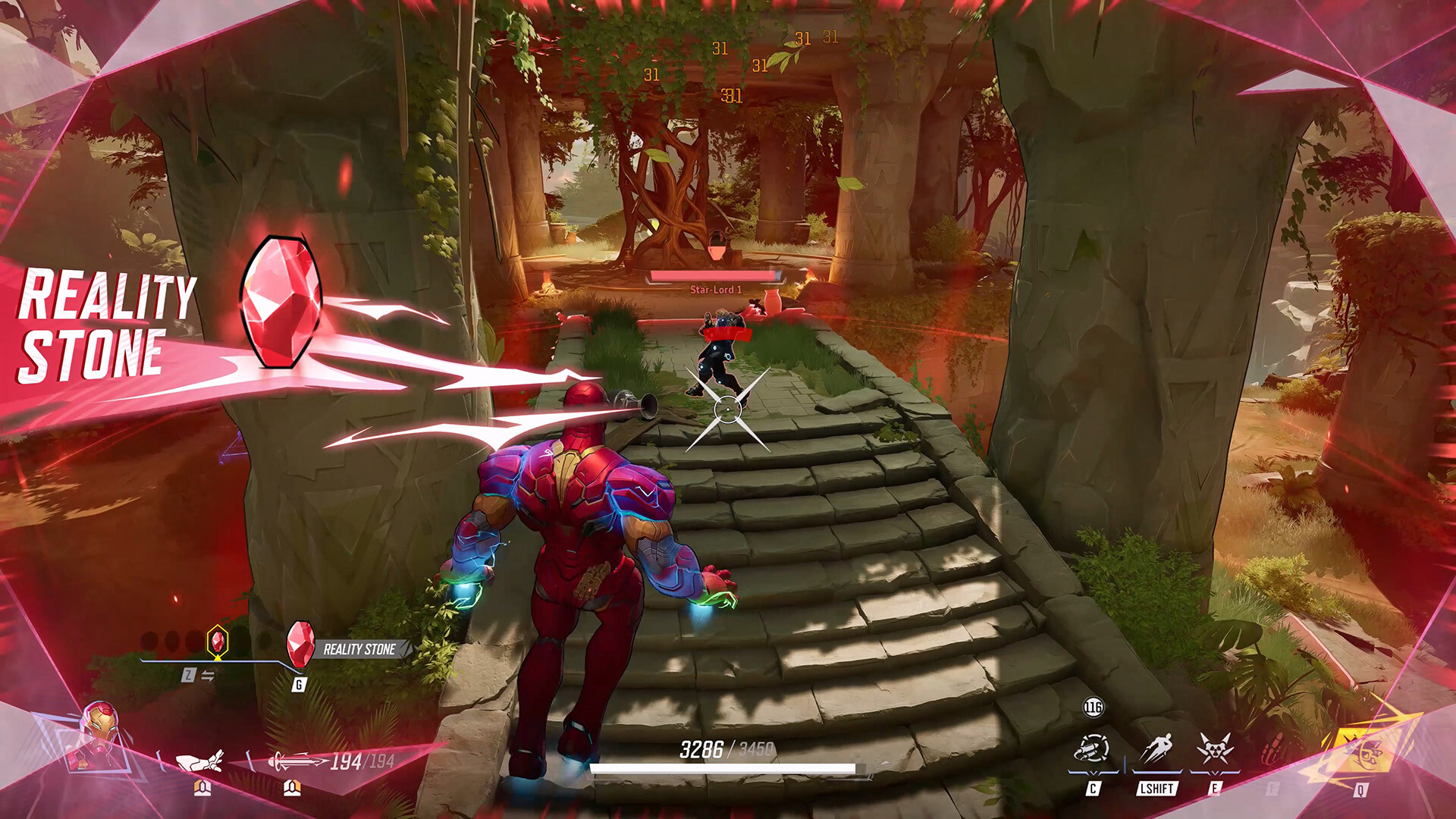
Team-Up skills add another layer of chaos on top of the debris. Having Rocket ride on Groot's back or using Hulk to charge Iron Man with Gamma energy creates distinct team interactions, but it also creates massive visual clutter. In the middle of an intense firefight, tracking active threat windows becomes a guessing game through layers of glowing auras, falling bricks, and laser beams.
Fair Systems and Rough Matchmaking
NetEase got the monetization structure right, and credit is due there. The game is free to play, sits around number ten on the United States Steam top sellers list, and launches with over thirty characters immediately unlocked. The battle pass does not expire, eliminating the usual seasonal pressure found in live-service shooters, and currency conversion is completely straightforward.
The actual matchmaking environment is where frustration sets in. Recent player reviews on Steam have dropped into mixed territory for good reason. Lopsided lobbies are frequent, pairing seasoned stacks against completely lost solo players who wander away from objectives. When a team-based shooter has shaky balance and wide skill gaps, the floaty combat mechanics stop feeling like casual fun and start feeling exhausting.


Comments 1
BestNewestHave you checked the control bindings yet? Melee feels off on default settings. What party comp are you running?