
Direct Handling and Clean Collision Boxes
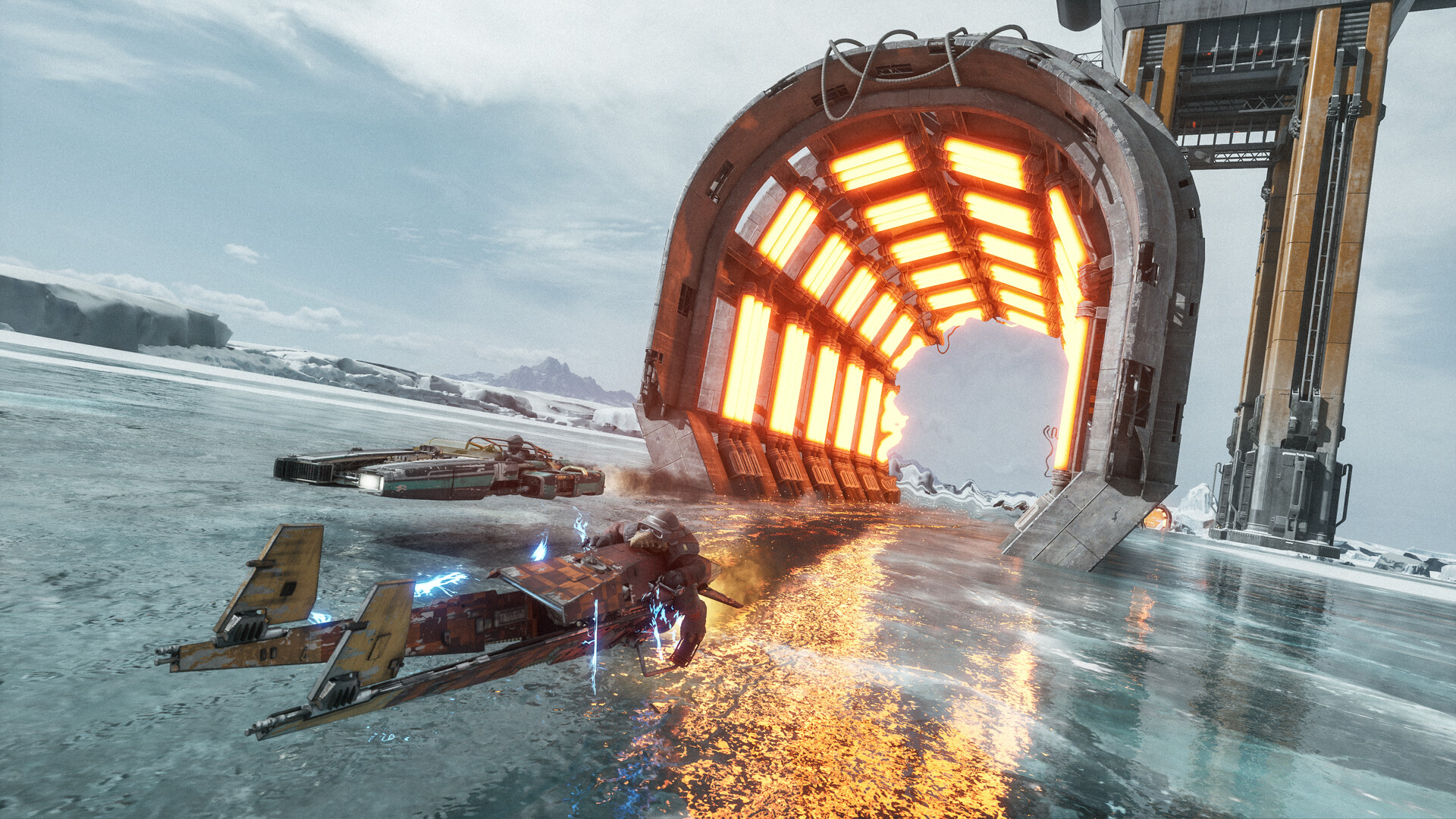
Controls define any game built on contact, and Galactic Racer gets the raw input right. The moment you drop into a speeder bike or a wide landspeeder, the throttle responds without artificial latency. The repulsor lift holds you a foot off the gravel, but the steering bite is immediate. When you pitch sideways to clip a canyon corner, the machine reacts on the exact frame you push the stick, which keeps you from feeling like you are driving a bar of soap.
That responsiveness matters because the combat is purely physical. You do not fire lock-on missiles. You win positions by lining up sideways shunts, slamming your chassis into opponents, and grinding them into retaining barriers. The physical contact boxes between hulls feel remarkably clean. If an opponent tries to clip your rear fin and misses by two inches, your craft stays stable instead of getting jerked by a sloppy invisible boundary. English interface and English voice work are included out of the box, keeping track warnings and spotter calls clear while you trade paint.

Drafting, Shunts, and Craft Weights
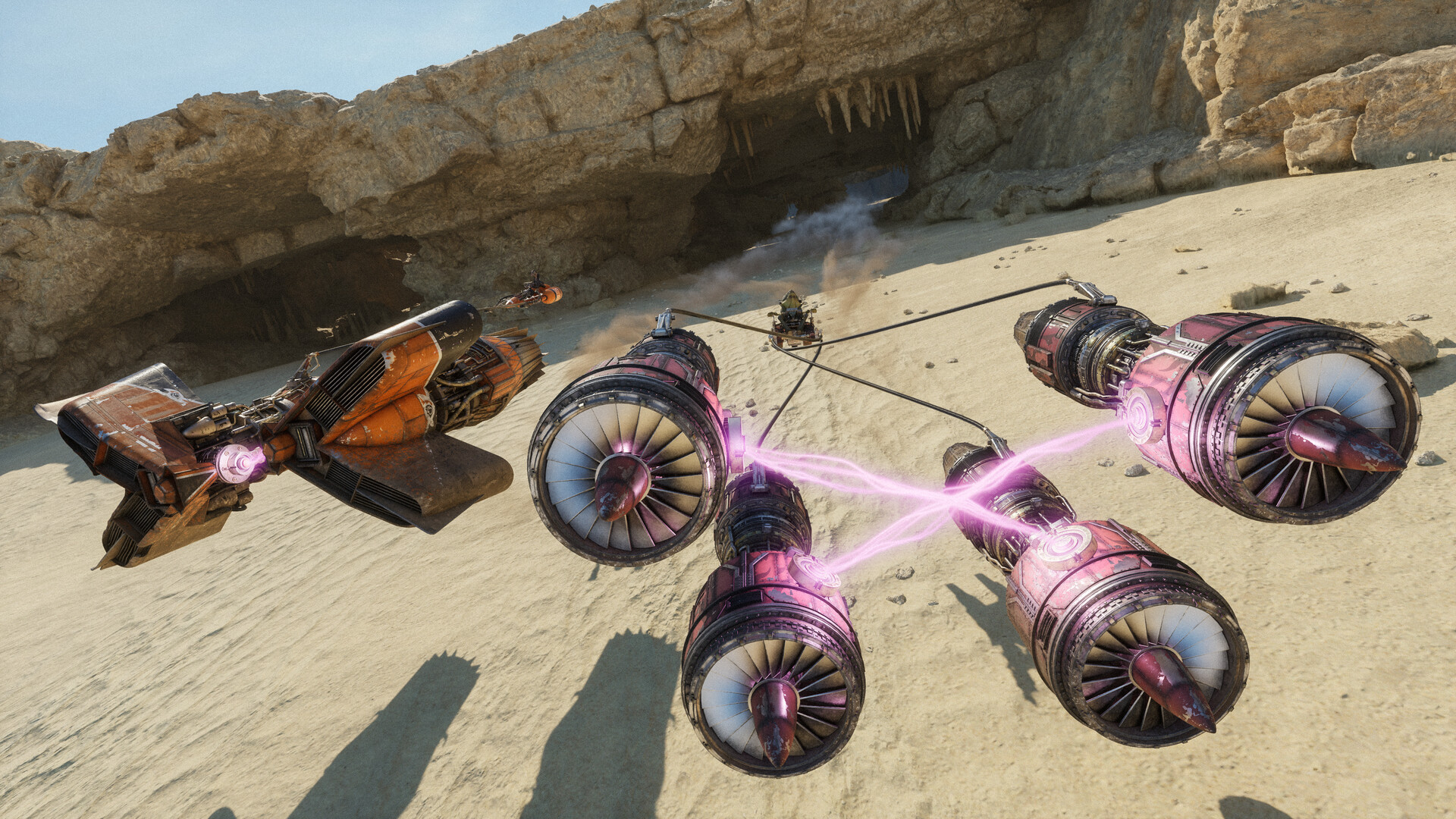
Each vehicle type carries distinct handling discipline. Speeder bikes snap side to side instantly and let you dodge incoming shunts with quick twitch reactions, but taking a direct hit from a heavy landspeeder will kick you clean across the dirt. Podracers pull extreme forward velocity on straightaways, yet the wide front engines demand precise spatial awareness through rock arches. Clip one turbine on an outcropping, and the physics simulation whips the cockpit around into a catastrophic wreck.
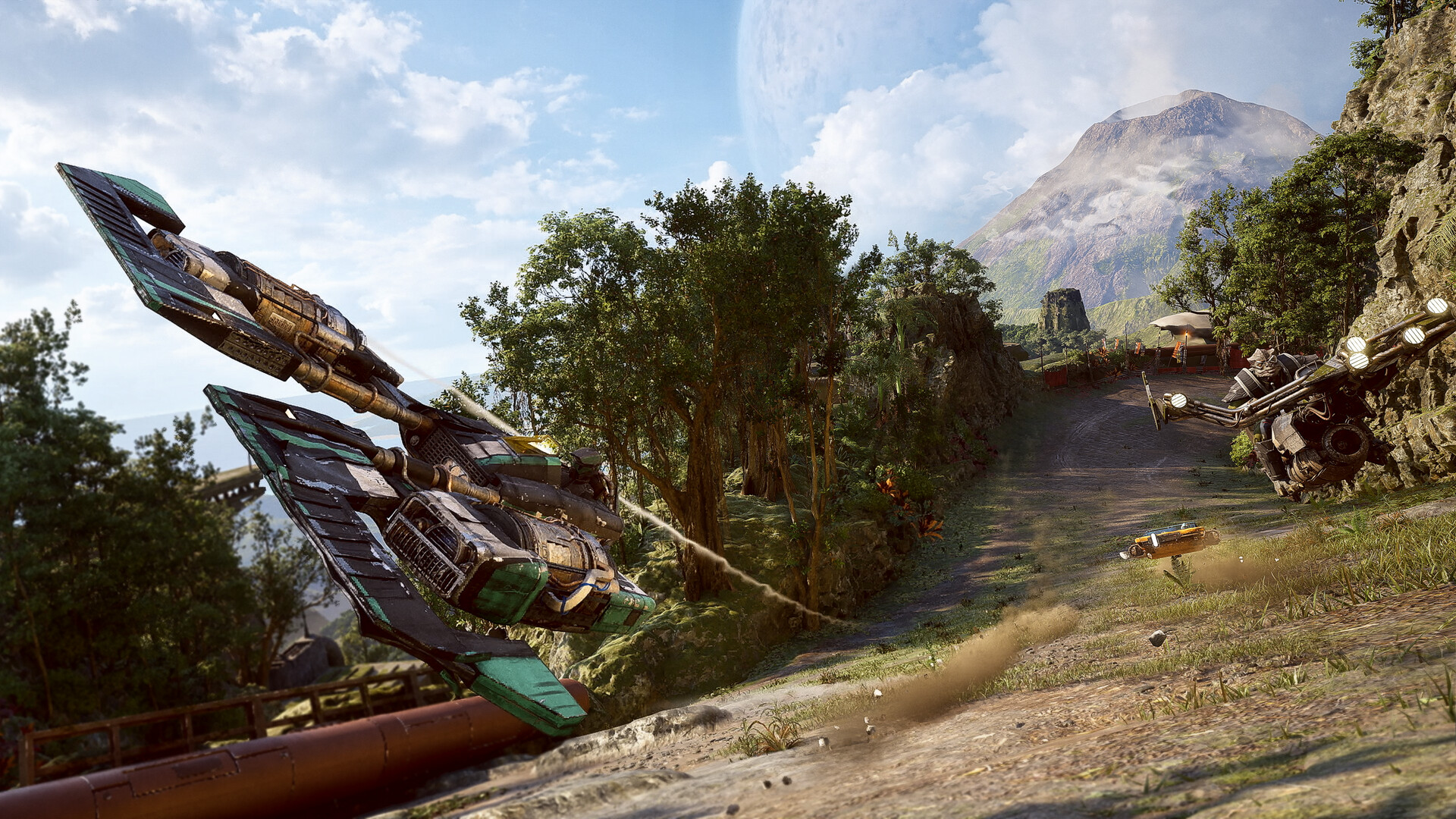
Skim speeders sit right between the extremes, offering just enough mass to survive cluster collisions while retaining quick pitch recovery. The game rewards you for reading the line of an approaching syndicate racer and timing your shoulder check at the exact moment their vehicle pulls alongside. If you time the hit poorly, your own nose deflects outward, losing valuable seconds while they slip away into the dust.
The Runs-Based Circuit Loop
The Galactic League operates as an underground tournament where syndicates bankroll the grid and take severe cuts when you fail. You play as Shade, climbing through a story campaign driven by territorial rivalries. Because the progression uses a runs-based structure, blowing an engine or wiping out against a canyon pillar carries actual stakes. Losing your vehicle mid-circuit cuts deep into your purse, forcing you to pick between budget repairs or fielding an underpowered chassis in the next heat.
That tension keeps the single-player campaign aggressive. Computer pilots do not simply stick to a predetermined racing rail. They actively defend passing lanes, attempt dangerous shunts near drop-offs, and fight to preserve their syndicate standing. Grudge matches ratchet up that aggression even further, turning later tournament rounds into ruthless survival scraps where a cautious line will get you shoved into a wall.
Performance Demands and Multiplayer Grudges
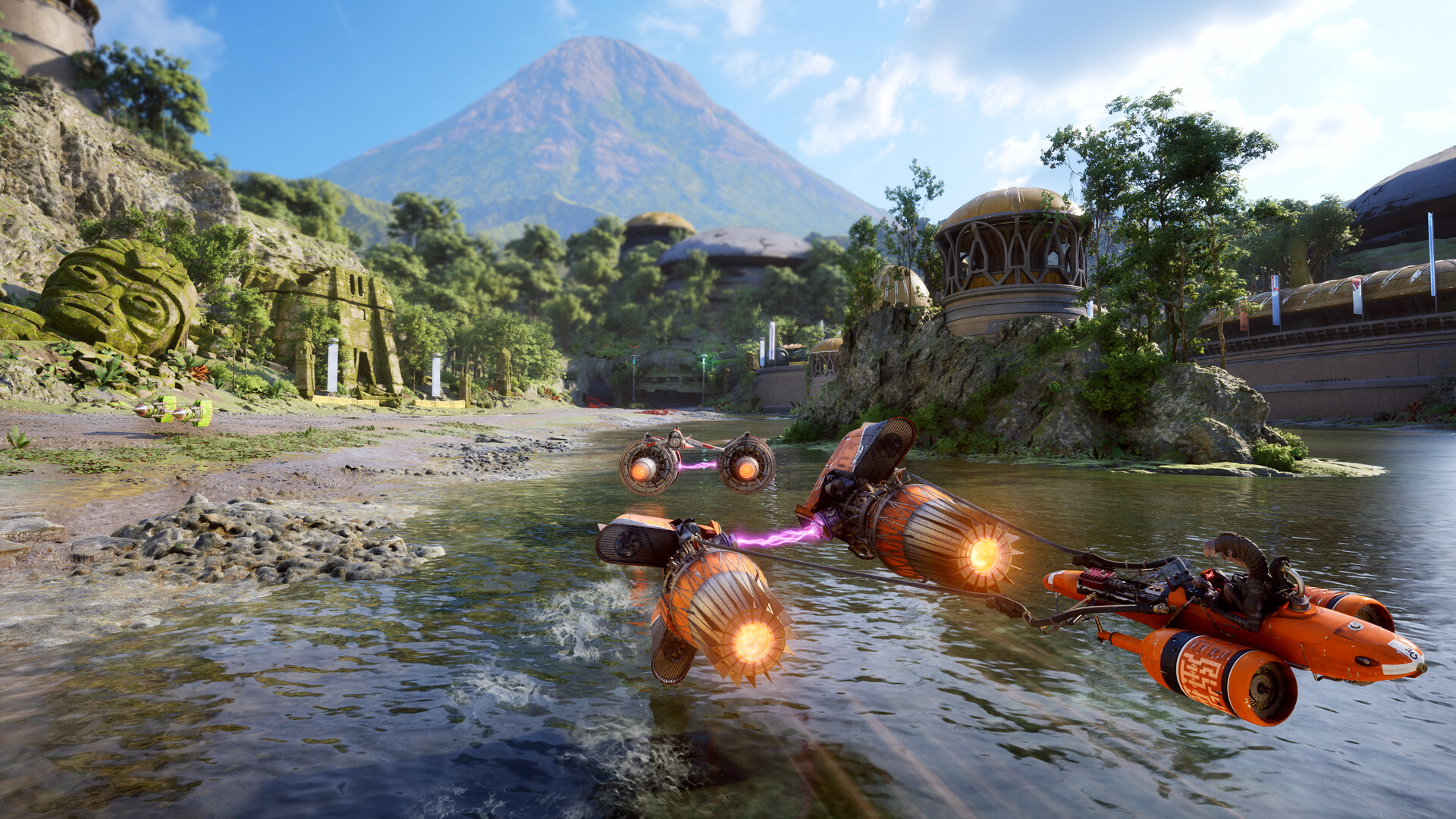
The game sits at #22 on Steam top sellers in United States right now, backed by 6958 recommendations, and that initial traction makes sense given how lean the gameplay loop is. The track visuals throw massive amounts of debris and engine exhaust across the screen at high speeds. For the most part, the action holds up under pressure. However, when eight craft pile into a sharp hairpin turn and start swapping metal simultaneously, the engine occasionally stutters during heavy dust kicks, briefly throwing off high-precision counter-steering.
Online PvP grudge matches test that precision to the limit. Going against human opponents exposes just how vital spatial timing is during high-speed passes. Human drivers will feign an early turn, bait your slam, and tap their brakes to let you careen into the barrier. At $59.99, the package relies heavily on players appreciating the raw tactile feedback of physical craft combat over standard arcade power-ups, but the underlying mechanics are strong enough to justify the price.


Comments 15
BestNewest★ Best comments
dude the collisions feel so good when you smash into someone and spin them out the sound design is chef's kiss this is what i wanted from a star wars racer i hope they add more tracks soon
I appreciate the tight handling and weighty collisions, but I cannot help feeling that a game about a racing league misses a real opportunity for character arcs. Apologies for being overly sentimental, but without a story to invest in, the mechanical precision feels somewhat hollow. The concluding chapter, if you could call it that, is just another race.
Really solid collision physics, the weight of each ship class comes through in the handling. Hope they patch the hitching soon, but this is a strong start for a niche racer.
Really solid collision physics, the weight of each ship class comes through in the handling. Hope they patch the hitching soon, but this is a strong start for a niche racer.
@needacoffeeEach to their own, but I'd rather have pod racing than demolition derby physics. At least the repulsor response is sharp, credit where it's due.
@prost_paulYeah, I'm with you. Sixty bucks for something that's basically a tech demo for repulsor physics? I'll wait for a sale. The handling looks good but not that good.
@needacoffeeI agree the collision physics are strong, but did anyone else notice the engine pitch shifting during boosts? Does the hitching scale with hardware or is it consistent across builds? I was impressed by the repulsor weight, though the drift on some turns felt a bit off on my setup.
@needacoffeeLeague as a lock-in sounds legit (would just want actual tracks though). no stress either way though (just vibes at it right now).
Good breakdown on the league setup. Really glad reckless driving actually costs you instead of just being mindless bumper cars. The stuttering during huge pileups sucks for quick turns though.
@Chloe (Ding)Great, another game where I'm supposed to care about fictional racing teams. Oh wait, there isn't any story. So it's just metal on metal. I mean, the physics are good, I guess. I ended up really getting into the league progression though. Makes me feel things about pixels.
Collisions feel super clean when you trade paint. Drift feels a little weird on some of the turns, but the weight is definitely there.
I appreciate the tight handling and weighty collisions, but I cannot help feeling that a game about a racing league misses a real opportunity for character arcs. Apologies for being overly sentimental, but without a story to invest in, the mechanical precision feels somewhat hollow. The concluding chapter, if you could call it that, is just another race.
Heaps of fun if you catch it on sale, but full price is dodgy for something this niche. Reckon $30 is more fair. Still, the collision system is top notch, just not worth sixty.
Quick tip: use the side-shunt just before a tight corner to shave off speed and avoid the drift penalty. works best with the light class. Hope they fix the hitch soon though, it threw off my line a couple times.
@flintnot worth full price at all... physics sounds solid from the review... the league risk/reward setup sounds interesting though just wish it cut closer to gpu headroom...
dude the collisions feel so good when you smash into someone and spin them out the sound design is chef's kiss this is what i wanted from a star wars racer i hope they add more tracks soon
u feel that rn lol. contact racing is solid actually. lite story expected but ur playing a racer so its fine.
The league setup actually makes you care about bashing your craft around, since reckless driving ruins your runs instead of handing you free wins. Picking a class early really commits you to how heavy or twitchy you want the steering to be. If you slam into a wall you get wrecked for real, so you can't just bounce off everything and expect to finish easily.