
Setting Sail Across Solistia
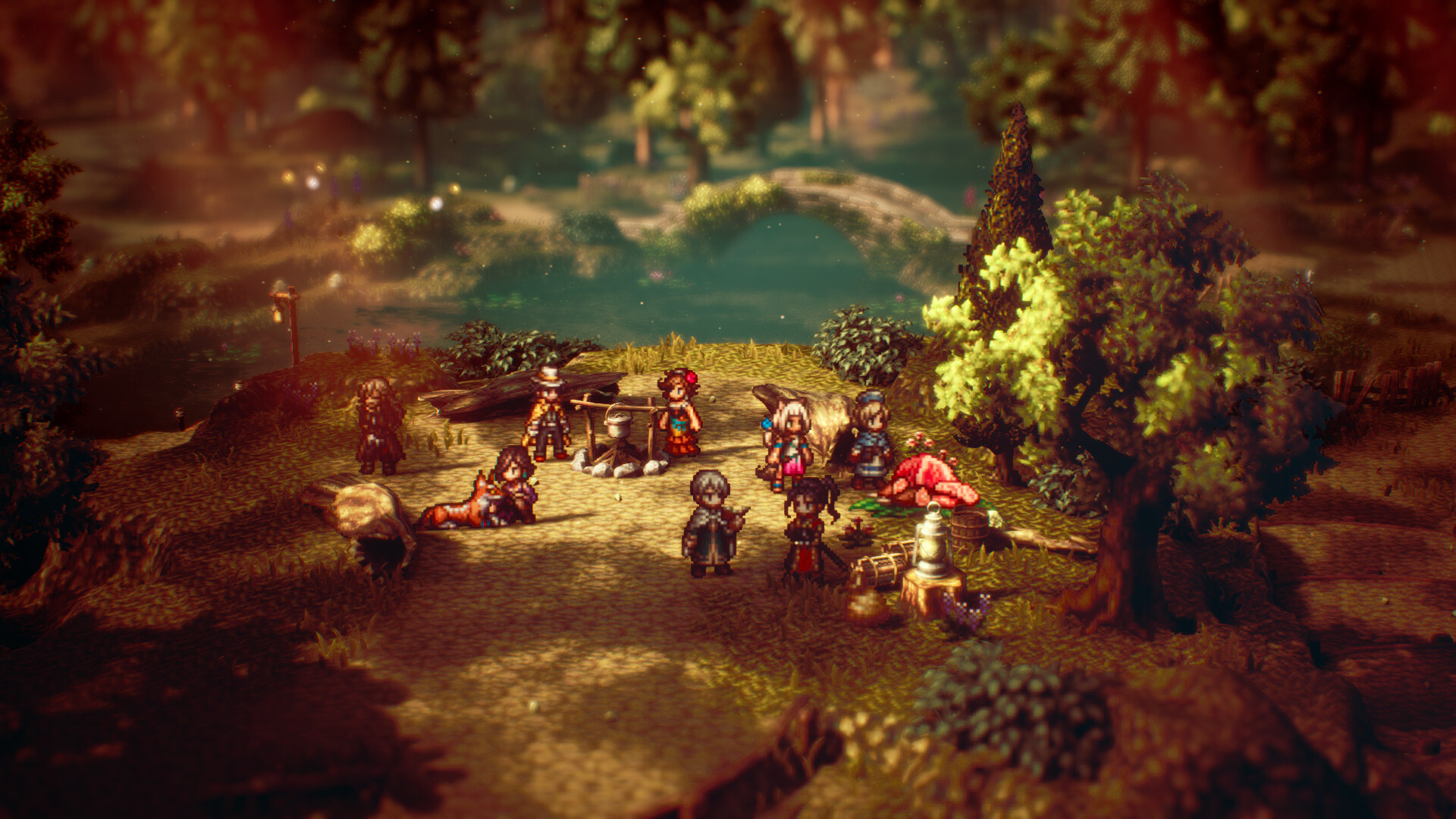
I spent my twenties tolerating fifty-hour role-playing games that wasted half my evening on slow walking animations and unskippable text crawls. Coming into this sequel on PC, my main question was whether ACQUIRE learned how to respect a working adult's schedule. The jump from the old setting to Solistia helps immediately. You get two continents separated by water, with steam engines and industrial harbors giving the world a more active feel than typical medieval ruins. The HD-2D presentation looks clean on a high-resolution monitor, sharpening character sprites against soft depth-of-field backgrounds without turning into visual clutter.
The Steam release runs smoothly, loading fast off an NVMe drive and giving you clean menu navigation whether you grab a controller or keep your hands on the keyboard. Both the English interface and the English voice track are solid right out of the box, with spoken lines delivering story beats without sounding stilted. Setting up audio levels and key bindings took less than two minutes, which is exactly how a sixty-dollar PC release ought to behave.
Flipping the Clock
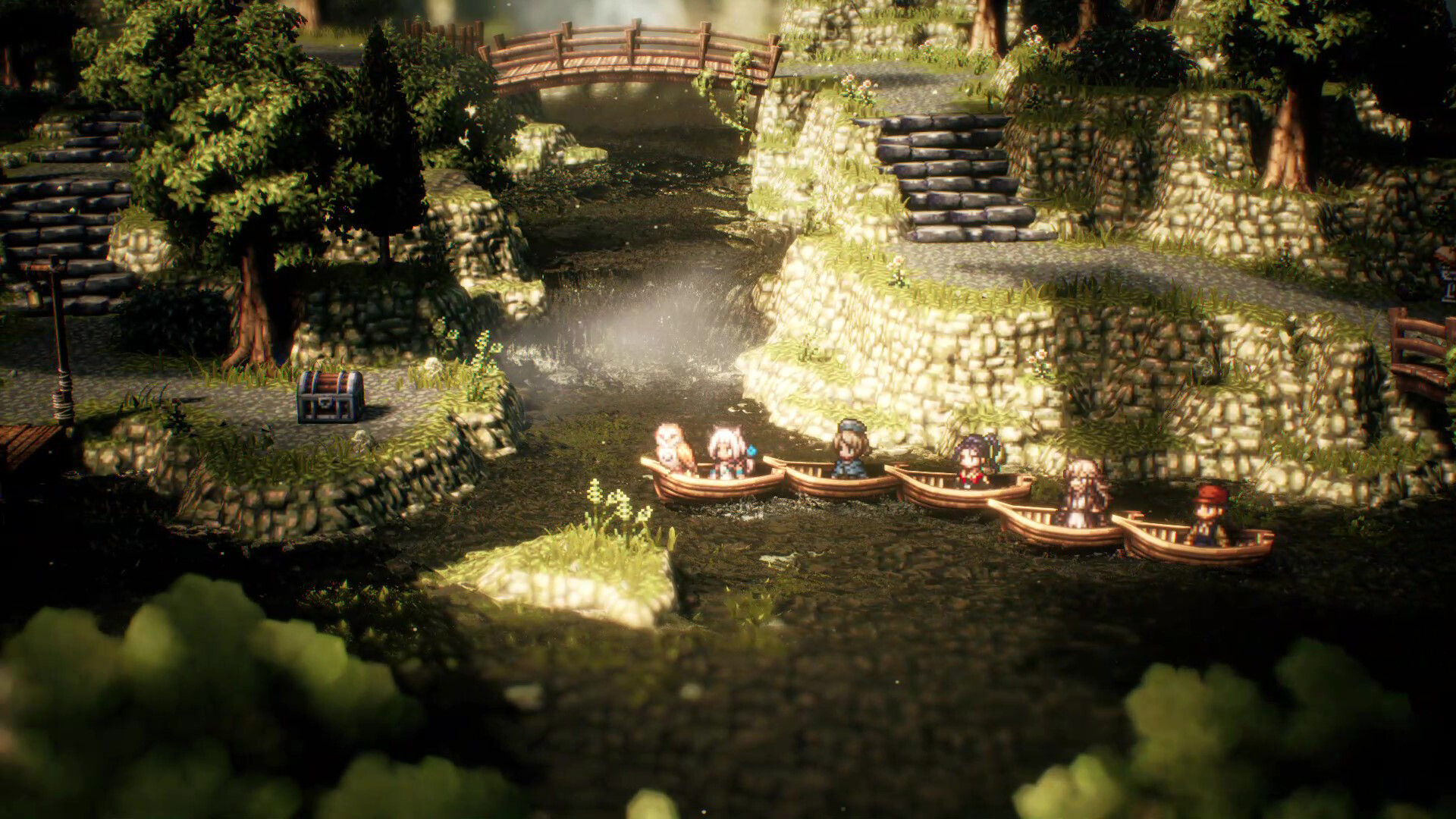
The biggest mechanical addition is a dedicated button that switches the time between day and night instantly. You do not have to sleep at an inn or run laps on the world map just to wait for dusk. You press a single key, the sky darkens, and townspeople move to new positions with entirely different dialog and needs.
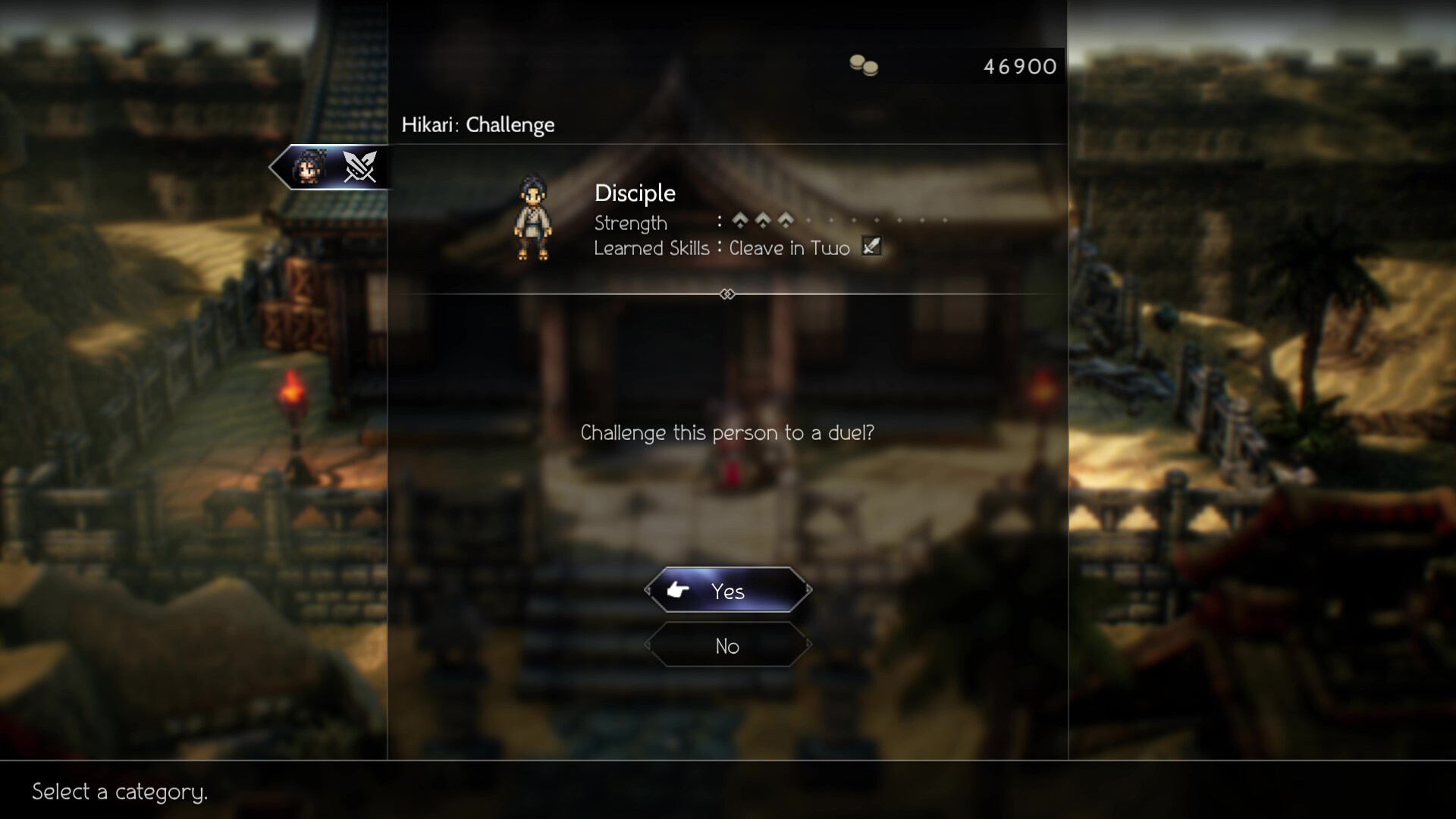
That swap directly feeds the Path Actions system. In the first game, checking every townsperson for items or information felt like tedious chore work because each traveler only had one field ability. Here, their abilities change depending on the sun. One traveler might bribe a guard during the day and knock him unconscious after dark to slip inside a locked warehouse. It cuts down on aimless backtracking. You check a street twice under different lighting, grab what you need, and move on to your objective.
Breaking Shields and Managing Turns
Combat brings back the core Break and Boost system, and it remains one of the tighter turn-based setups on the market. Enemies carry shield points and specific weapon or elemental weaknesses. Hitting those vulnerabilities strips away shield counters until the target breaks, losing its current turn and taking heavy damage from whatever you throw at it next. Every turn generates Boost points that let you attack multiple times or amplify your spells.
It rewards foresight instead of mindless auto-attacking. Bosses hit hard enough that failing to break them before a charged strike means loading your last save, yet random encounters rarely turn into slogs if you build your party around covering common weapon types. Customizing secondary jobs and slotting support skills lets you tailor four-man squads for specific routes, giving you plenty of tactical freedom without forcing you to spend an hour reading wikis.

The Weight of Eight Beginnings
Where the game tests my patience is its structural rhythm. Because you can pick any of the eight travelers as your starter and recruit the rest in whatever order you want, the opening third of the campaign involves watching eight separate introductory chapters. You walk into a town, trigger a flashback, run a short dungeon, fight a boss, and repeat. By the fifth recruit, the formula feels overly familiar, even with solid writing carrying individual subplots like poverty and industrial greed.
Still, the package justifies its $59.99 price tag by trimming dead air everywhere else. You get an encounter rate that does not drive you crazy, fast travel between visited towns, and combat animations that move briskly. It asks for a substantial time commitment, but unlike many of its genre peers, it spends that time delivering active decision-making rather than busywork.


Comments 18
BestNewest★ Best comments
Fair point on the detached stories early on. Grabbing all eight characters back-to-back definitely drags, especially running through chapter ones over and over. Glad the break and boost combat holds up though, that loop was the best part of the first game.
ngl the disconnected stories feel like poor design instead of a deliberate choice. eight protagonists and none of them interact early on. final chapter hit right in the feels though, even if getting there tested my patience.
Thank you for the tip on the day and night toggle. I found that recruiting all eight characters does take some patience early on. The combat system remains engaging throughout. A very pleasant experience overall, thank you.
chapter 2 path actions get spicy with the night variants. what's your chapter 1 party looking like? have you checked the control bindings yet?
eight protagonists feels like building a deck where half the cards whisper 'maybe next turn' lol. am i bad at this or is the RNG personally offended by me?
fair dinkum, the monster animations in the late-game dungeons had me more nervous than the unruly students I teach. the visual polish on the break effects is something else, no drama about that.
@pjh81Fair point on the detached stories early on. Grabbing all eight characters back-to-back definitely drags, especially running through chapter ones over and over. Glad the break and boost combat holds up though, that loop was the best part of the first game.
another turn-based game expecting praise for doing the bare minimum. the day/night toggle exists in literally every other rpg with time mechanics. still, $60 for eight stories that barely acknowledge each other is fine i guess. groundbreaking stuff, truly.
Forgive the sentimentality, but that final confrontation with the eighth protagonist's arc was genuinely moving. The detached early chapters nearly cost me the investment.
ngl the disconnected stories feel like poor design instead of a deliberate choice. eight protagonists and none of them interact early on. final chapter hit right in the feels though, even if getting there tested my patience.
octo-path? more like octo-pain getting all eight started lol. no spoilers but that ending completely wrecked me. worth the grind tho
y'all sixty bucks could buy a mess of diner breakfast platters. fixin to wait for a sale myself. the day/night toggle sounds nice tho
Proper glad they sorted the day/night faff from the first game, mate! That backtracking was a right pain. The visuals look cracking on PC too - sharp as anything. Reckon the eight-story structure is still a bit of a slog to start but the Boost/Break combat keeps it moving. £50 is a fair shout for the hours you'll get out of it. Reckon you'll smash it next run, mate!
@Matty Kmatty k what resolution you running? my 3060 handles 1440p fine but ui scaling gets weird. party setup for chapter 1? Have you checked the control bindings yet?
@Matty Kmatty k what resolution you running? my 3060 handles 1440p fine but ui scaling gets weird. party setup for chapter 1? have you checked the control bindings yet?
...the review mentions the pc port runs clean... thats good to hear... been waiting to pick it up on steam... pretty chill... really needed that today...
@hedgehog_5tbh the stories still feel disconnected lol 8 separate games mashed together $60 is steep for that
@crumpetsixty bucks for eight separate stories that barely talk to each other. groundbreaking stuff, truly. feels like paying twenty euros for a mediocre pub burger and calling it a tasting menu. the day night toggle is the only thing that respects your time
@hedgehog_5tbh played on my cracked phone via steam link lol didnt overheat once. stories disconnected but combat clicks. $60 steep tbh wait for sale
day/night toggle is a lifesaver for path actions. what party you running for chapter 1 grind? Have you checked the control bindings yet?
@lanternThank you for the tip on the day and night toggle. I found that recruiting all eight characters does take some patience early on. The combat system remains engaging throughout. A very pleasant experience overall, thank you.