
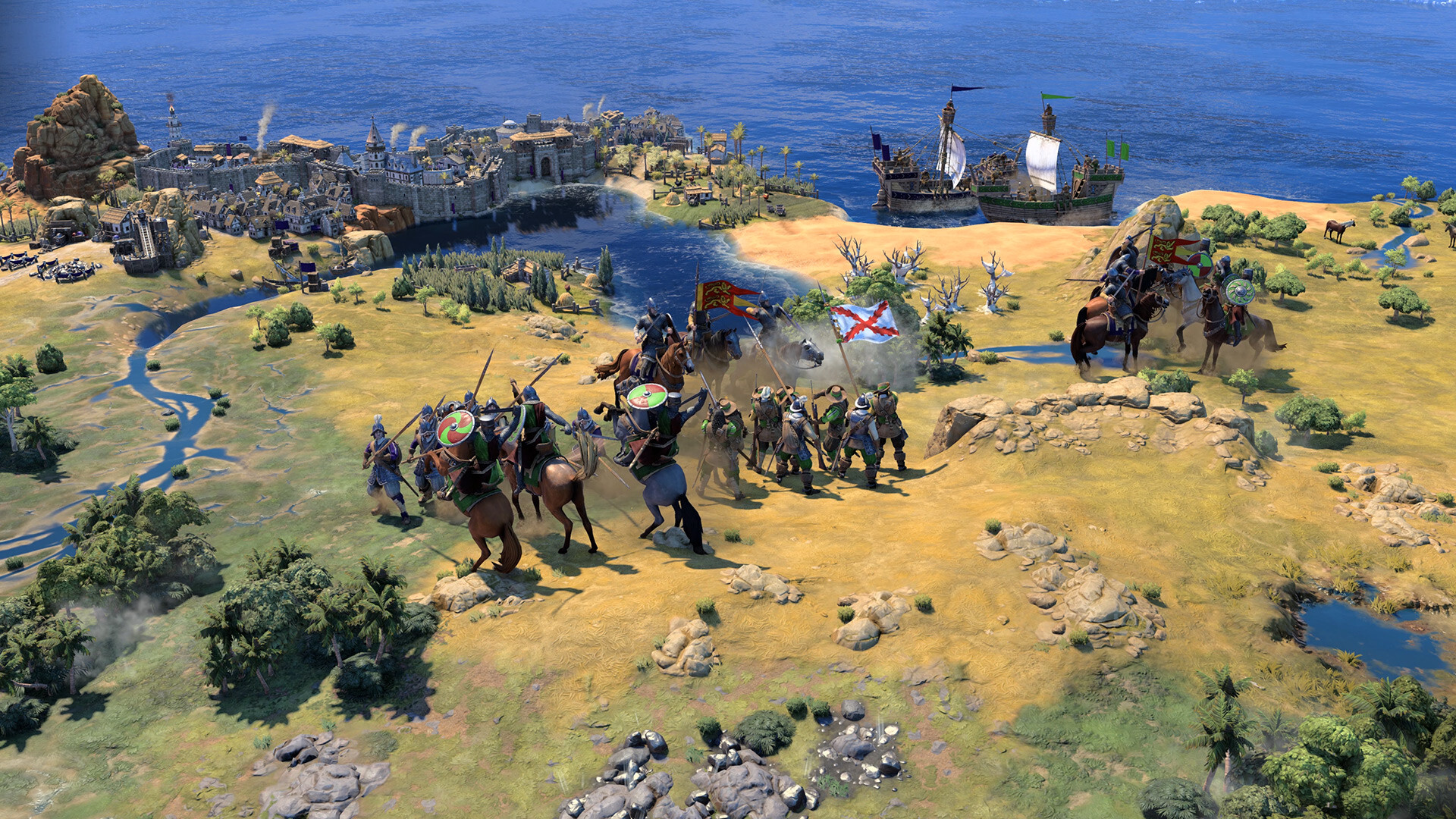
Breaking the Continuous March of History
Civilization has spent decades asking you to nurse a single tribe from stone clubs to orbital satellites. Sid Meier's Civilization VII chooses a different structure. Firaxis divides each campaign into three distinct chapters: Antiquity, Exploration, and the Modern Age. You pick a starting culture, settle land, construct ancient wonders, and race toward era-specific milestones known as Triumphs. When the clock winds down on Antiquity, your empire does not simply glide into the Middle Ages on autopilot. You are presented with a transition where you decide whether to preserve your culture as a time-tested civilization, pivot into a brand-new cultural identity suited for the middle game, or mix traits into a hybrid setup.
That division solves a design problem that has dogged turn-based strategy for as long as I have played it. In older entries, the early game was electric, full of quick scouting choices and land grabs, while the middle hundreds of turns turned into administrative maintenance. By breaking play into three self-contained eras with specific scientific, cultural, militaristic, and economic goals, the pacing stays brisk. The English voice acting and crisp interface text make navigating these transitions clear enough, so you always know what milestones carry forward into the next era.
Managing Settlements and Territory Layouts
Settlement management feels deliberate. Instead of dropping generic cities that all construct the same market and granary queues, you are thinking about how your territory interacts with natural resources and neighboring borders. Wonders take up physical space, dictating where your production goes and forcing hard choices between defensive terrain and cultural landmarks. When your board state gets crowded, you have to prioritize which hexes get improved first.
This is where the upgrade chains can turn punishing. In my first run through the Exploration Age, I pushed heavily into resource development to fuel a massive naval expansion. Coastal settlements were humming. Inland, though, I neglected basic food growth. That choice hit hard. My inland towns ran completely out of basic yields to support higher-tier production buildings, leaving new workshops stalled midway through construction while neighboring empires pushed past me on scientific milestones. You cannot blindly specialize without keeping the fundamental food and production baseline alive.
Triumphs and the Pursuit of Victory
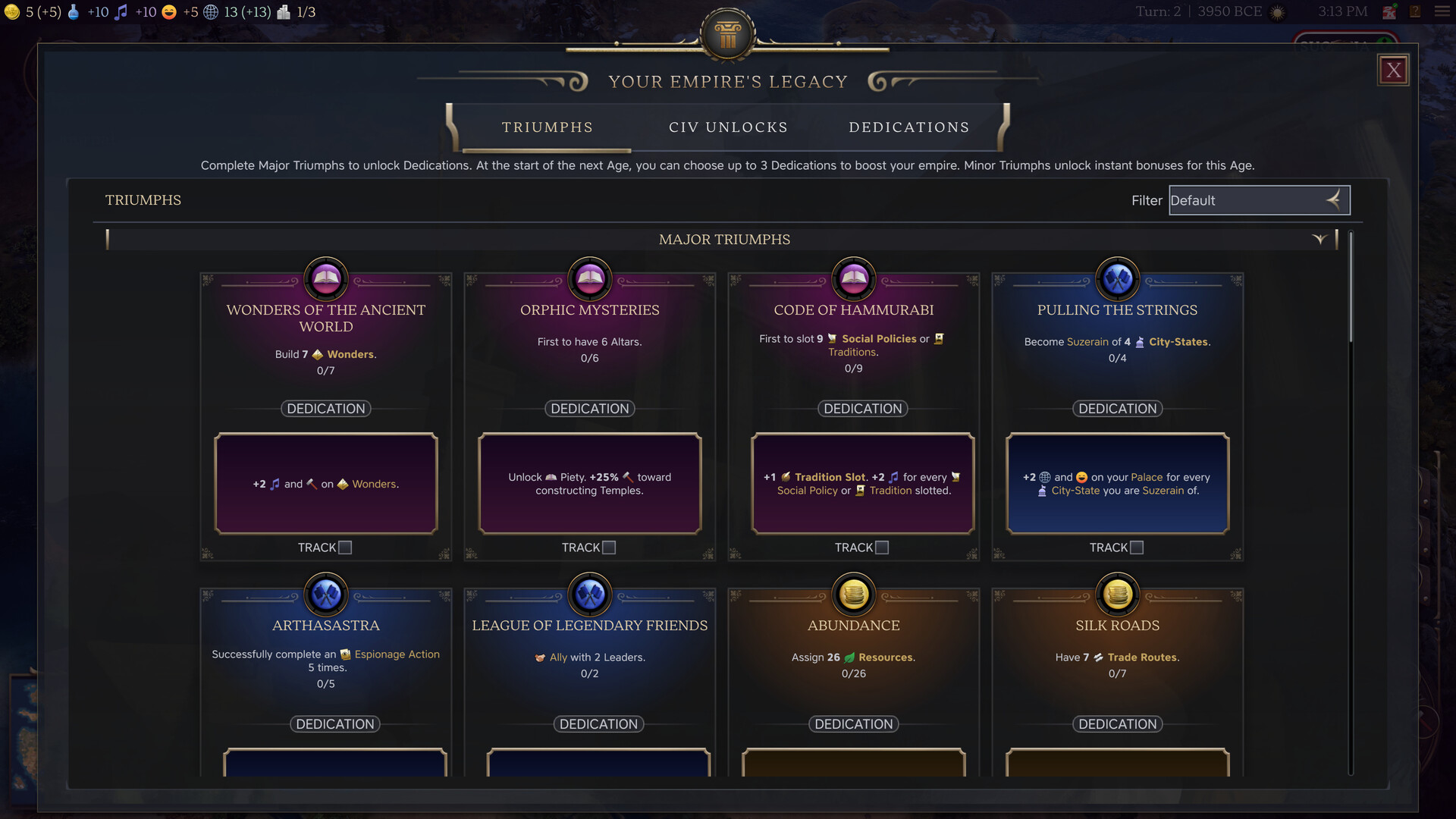
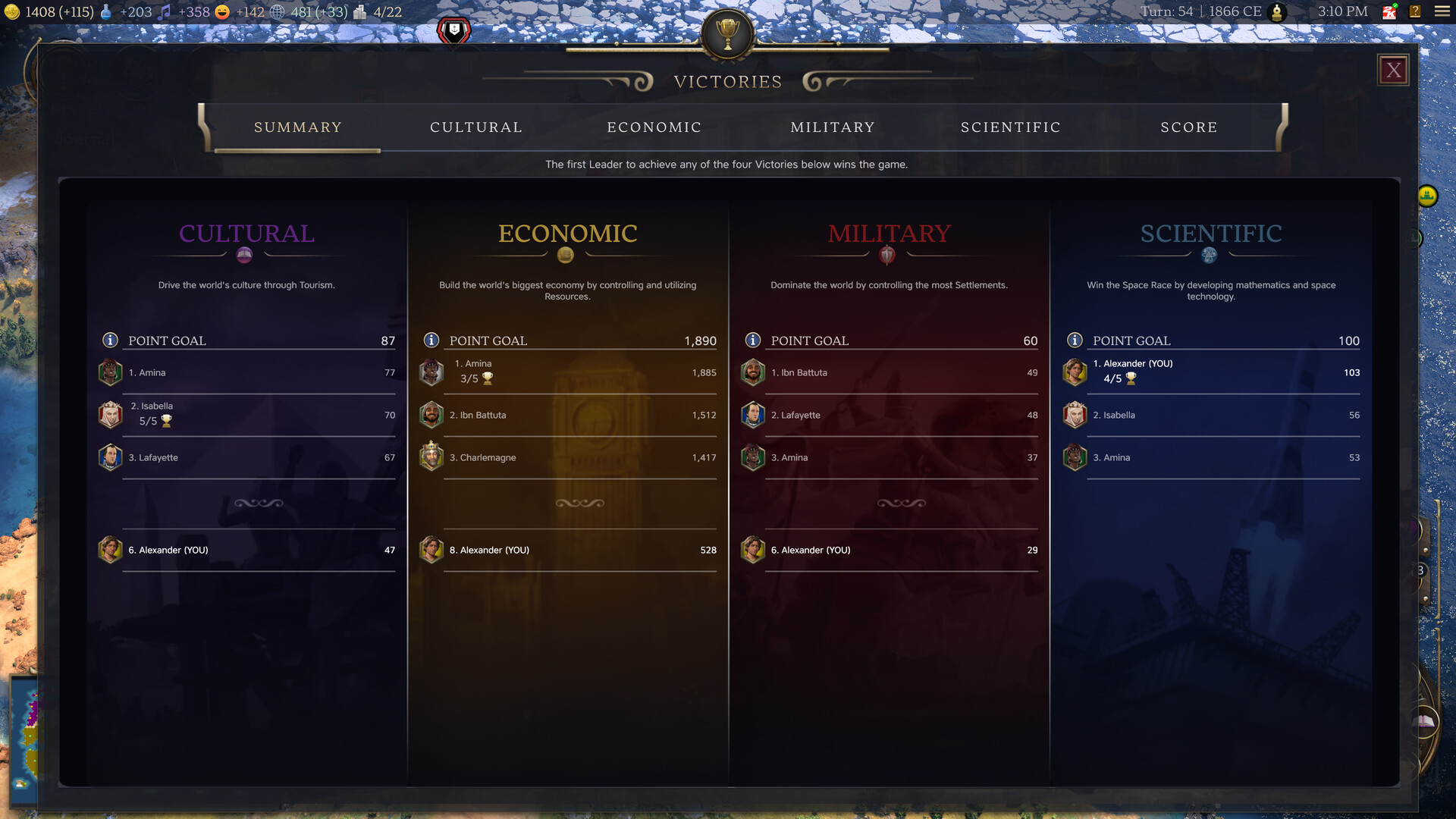
Victory no longer feels like an invisible bar filling up off-screen while you click end turn. The Triumph system grounds your progress in active tasks. If you want an economic win, the game asks for specific commercial achievements during each era rather than an abstract pile of accumulated gold. Achieving these milestones grants distinct bonuses that roll directly into the following age, rewarding you for committing to a clear line of play early.
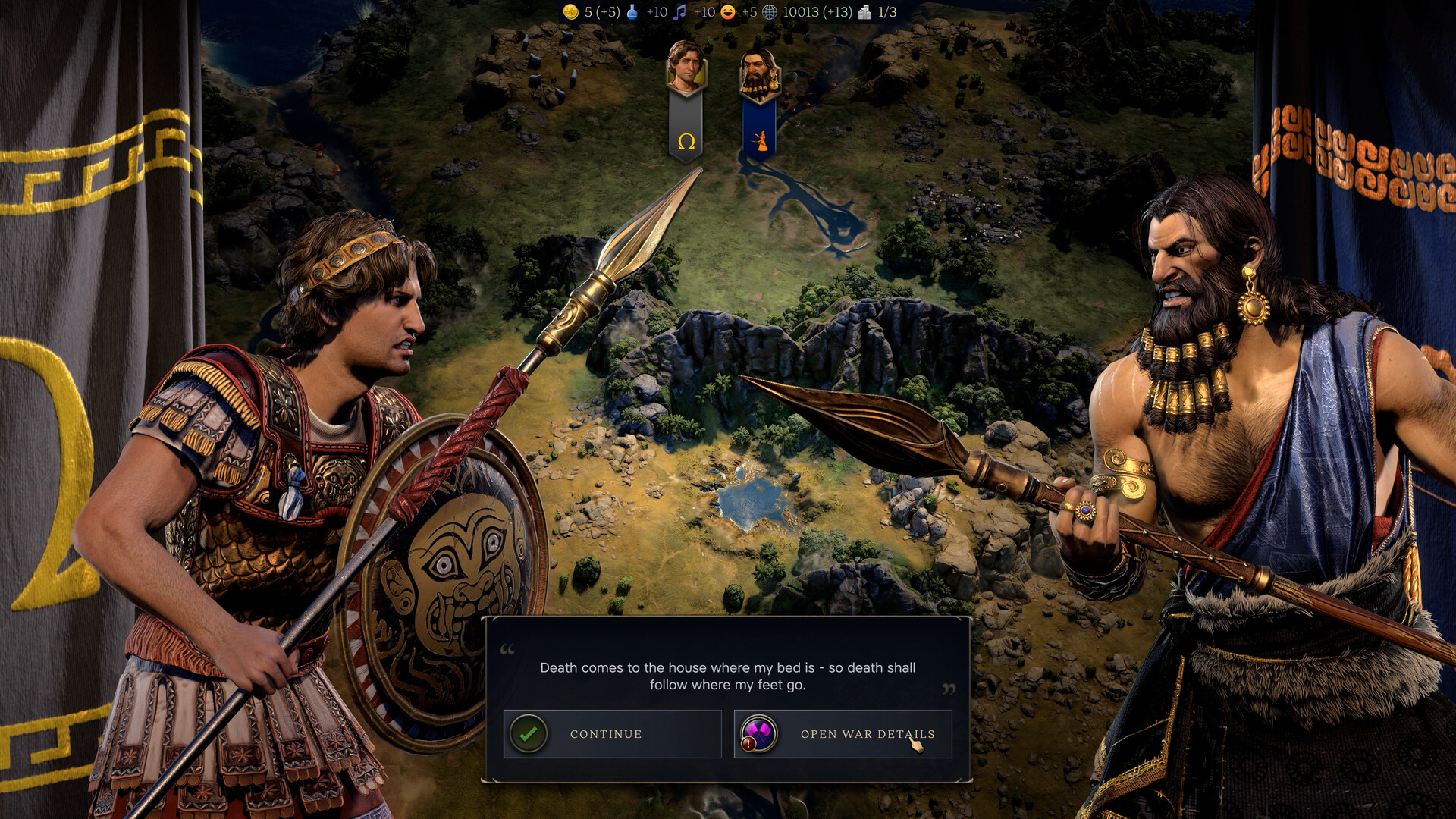
The trade-off is emotional attachment. Part of the appeal of leading Rome or Egypt in previous games was the feeling that this specific group of citizens survived three thousand years under your continuous watch. Here, shifting your empire into an entirely different civilization at the dawn of the Exploration Age feels mechanical. It is mechanically sound, giving you fresh bonuses and distinct units when the map expands, but the narrative line breaks. You feel like a manager swapping out gear sets between stages rather than an immortal ruler guiding one people through the ages.
The Strategic Package on PC
At $34.99 on Steam, the package feels focused. The base engine runs smoothly, turns cycle without agonizing pauses in single-player, and the multiplayer setup handles era transitions cleanly enough when everyone is paying attention. The map graphics have a clean, board-game clarity that makes scouting mountains, rivers, and contested borders easy on the eyes.
It is a daring design change for Firaxis. Long-time players who enjoy the quiet, sprawling marathon of an endless 4X map might feel the era resets cut their hard work short. Players who routinely abandoned campaigns around turn two hundred because the outcome was already decided will find these structured Ages keep them engaged until the final screen.


Comments 18
BestNewest★ Best comments
Pillow3, it ain't about clingin' to a picture. It's my folks' memories. Swappin' their whole way of life mid-stride leaves 'em lost.
Y'all got me fixin to cry over pixels. Swapping cultures mid-game? That's like tradin' your grandma for a new one.
Strewth, you spend ages getting attached to your lads, then the game does a full costume change and tells you it's still the same empire. No drama, I guess, but my capital's staying named after the dog.
dont worry too much about the civilization swap feeling weird at first, we all had to learn the hard way! Just keep your basic settlement yields up so your upgrades don't stall out and the next Age won't feel nearly as rough. Youre doin fine.
Y'all are fixin to get three ages for that $34.99, which is about a couple of diner breakfast platters and a whole lot more hours. Fair enough, if you ask me.
Pillow3, it ain't about clingin' to a picture. It's my folks' memories. Swappin' their whole way of life mid-stride leaves 'em lost.
@hot cornbreadu still cryin about memories, hot cornbread. the whole point is adaptin, not watchin the same spearman model
Strewth, you spend ages getting attached to your lads, then the game does a full costume change and tells you it's still the same empire. No drama, I guess, but my capital's staying named after the dog.
Triumph goals actually give you something concrete to do every turn instead of staring at passive bars, which is nice. Swapping civs mid-game just kills the whole vibe of running one empire through history though.
has anyone tried focusing purely on cultural wonders in each age? wondering how the transition affects that.
@bkw92dont overinvest in one type of wonder each age. keep basic settlement yields solid or specialized upgrades stall hard. adapt ur wonders to the new era
@bkw92Good question. If you lean too hard on cultural wonders in the early going, the transition can sting, because some of those bonuses don't carry their weight once your civ changes. The trick is to keep your basic settlement yields up so those specialized lines don't stall. You can still chase wonders, just leave yourself room to pivot.
honestly $34.99 is pretty fair for how much strategy you get across the three ages. civ swapping feels weird still, but i don't feel ripped off.
The faster pace is nice, but civ swapping mid-match just feels weird historically. Really hope they tweak how that works down the line.
@denver_matt$35 for a game that erases your progress every few hours? Groundbreaking stuff really. I'll wait for a sale.
@denver_mattera transitions keep the pacing moving at least, even if losing your original civ hurts a bit. glad triumph goals actually give you stuff to do every turn instead of just watching a victory meter slowly tick up.
Swapping civs every Age totally broke my roleplay, ngl. But at least the turns actually move fast now instead of dragging out forever.
So do I have to rename all my cities every 100 turns? Asking because I named my capital after my dog and he's gonna be confused.
Y'all got me fixin to cry over pixels. Swapping cultures mid-game? That's like tradin' your grandma for a new one.
@hot cornbreadyou clearly didnt play it properly, swappin civs is fine if you don't get attached to a texture. The game is about adaptin.
@hot cornbreadDon't give up just yet... it really changes how you think about empire building... but there's a certain beauty in adapting to each age's unique challenges... I hope you give it another try.